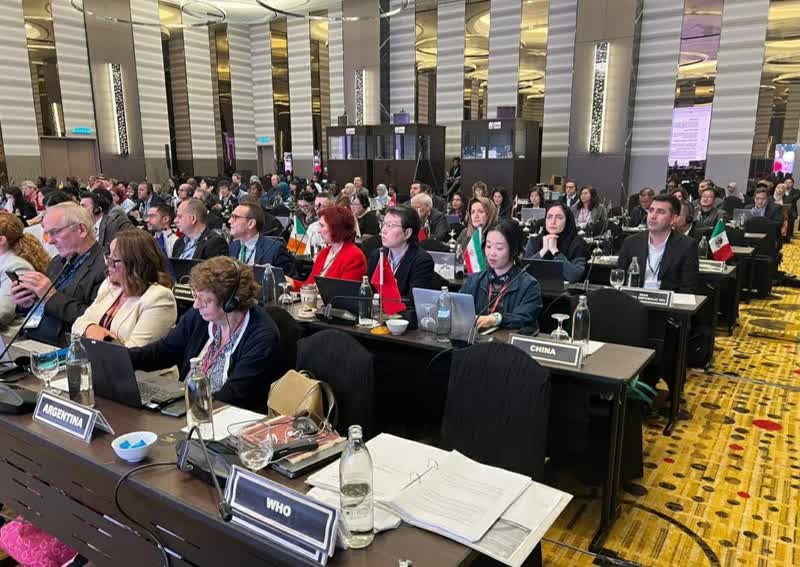

Report on the presence of a faculty member of the Endocrine and Metabolism Research Center at the 29th International Meeting of the Codex Committee on Oils and Fats (CCFO29)
Codex Alimentarius is a set of international standards, guidelines and codes in the field of food safety and quality, developed in collaboration with the Food and Agriculture Organization of the United Nations (FAO) and the World Health Organization (WHO). The Codex Committee on Oils and Fats (CCFO) is one of the specialized committees of this set that develops and revises standards related to various types of edible oils and fats; an issue that, in addition to its commercial dimensions, has a direct impact on the nutritional health of society. The 29th session of this committee (CCFO29) was held in Kuala Lumpur, Malaysia, from 9 to 13 February 2026, with the participation of representatives of member countries, international organizations and specialized institutions. At this session, important issues were discussed, including the restriction of trans fatty acids, quality indicators for the authenticity of oils (especially olive oil), and the examination of the characteristics of emerging edible oils. Given the determining role of fatty acid composition in the occurrence and prevention of non-communicable diseases, especially metabolic and cardiovascular disorders, the topics discussed in this committee are directly related to the research areas of the Endocrine and Metabolism Research Center. In this regard, the presence of a faculty member of this center in the Iranian delegation provided an opportunity to present evidence-based scientific perspectives in the field of nutrition and metabolic health in international decision-making processes. The Iranian delegation, with the participation of representatives of the National Organization for Standards, the Food and Drug Administration, the academic sector, and the edible oils industry, had an active and influential presence in the specialized discussions of the meeting. In this framework, Iran's proposal regarding the revision of the stearic acid limit in high-oleic sunflower oil in the Codex Edible Oils Standard (CXS 210-1999) was presented. This proposal was made with the aim of aligning international standards with scientific evidence and the realities of production and trade, reducing unnecessary trade barriers, and preventing the rejection of healthy products that comply with the natural characteristics of the oils. This proposal, after technical discussions at the meeting, was considered and supported by the Codex Secretariat and the Chairman of the meeting, and was also supported by many countries. Finally, the Committee agreed to follow up the issue through an official correspondence (Circular Letter) to survey and collect more data from member countries (as the fastest possible process), which indicates the scientific and administrative importance of this issue at the international level. This success is the result of effective interaction between the scientific, administrative and industrial sectors of the country and is an important step towards enhancing the country's role in developing international food standards and strengthening evidence-based approaches in the field of nutrition and health.